What Soul Food Actually Does for Your Heart: A Dietitian Sets the Record Straight
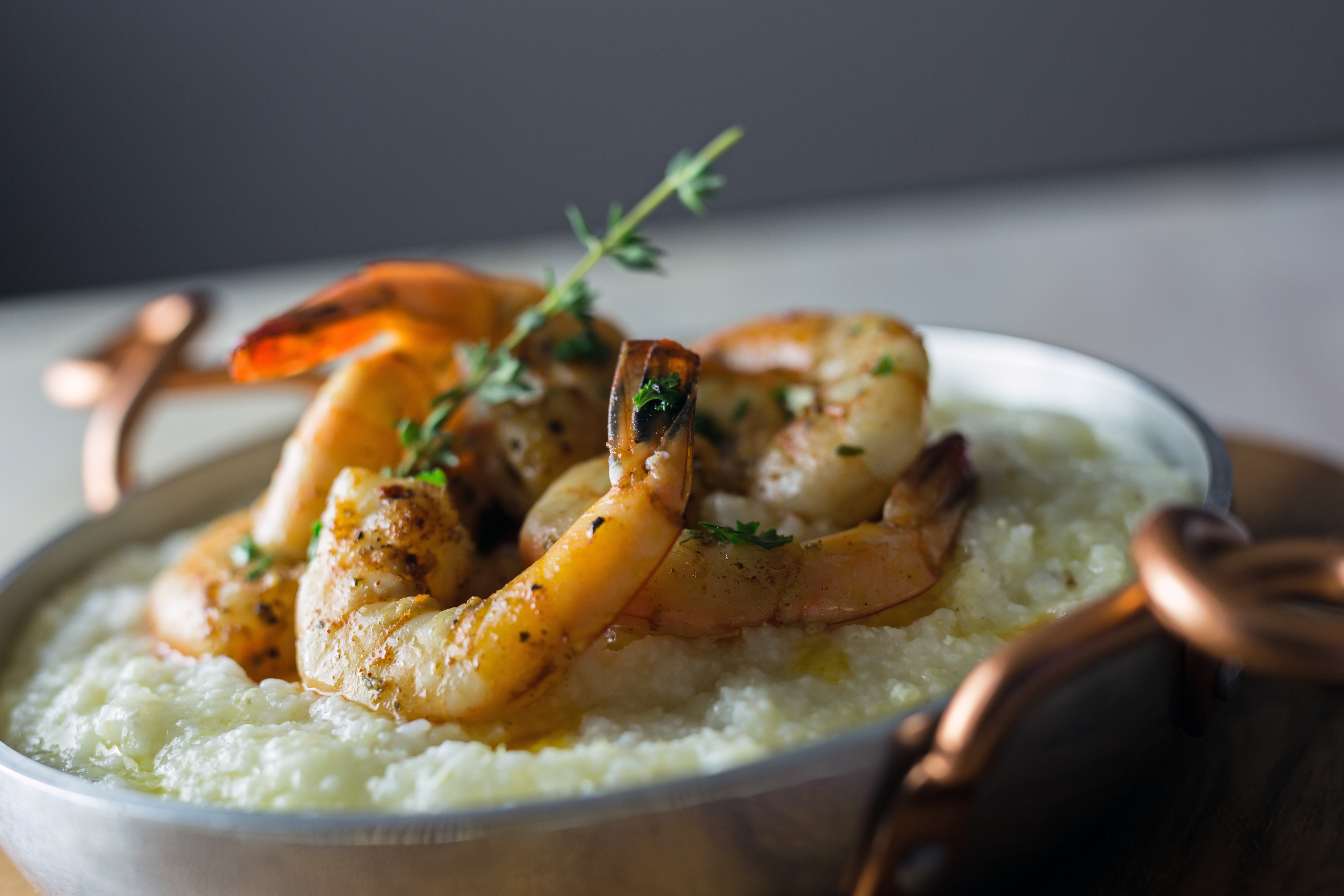
There's a question that's been quietly weighing on Black women for decades, whispered in doctor's offices and wellness spaces: Is the food from my culture making me sick? It's a question born from years of being told that heart health requires a Mediterranean diet, that "clean eating" means abandoning collard greens for kale, that the meals passed down through generations are somehow working against us. But what if the narrative we've been sold is incomplete or worse, wrong? Ashley Carter, MS, RD, LDN, registered dietitian and co-founder of EatWell Exchange, is here to rewrite that story. With roots in both Southern and Caribbean food traditions, Ashley brings scientific rigor and cultural reverence to a conversation that's long overdue: what soul food actually does for your heart, and why reclaiming these foods is an act of both health and heritage.
The Foods We've Been Taught to Question
When Ashley talks about growing up eating black-eyed peas, collard greens, and Caribbean staples like curry and roti, she's describing more than just meals. She's describing a lineage. "When we learn about 'healthy foods,' many of us never saw our cultural foods reflected in those conversations," she explains. "Recognizing our cultural foods as nutritious matters because lifestyle changes are more sustainable when they feel familiar and culturally meaningful."
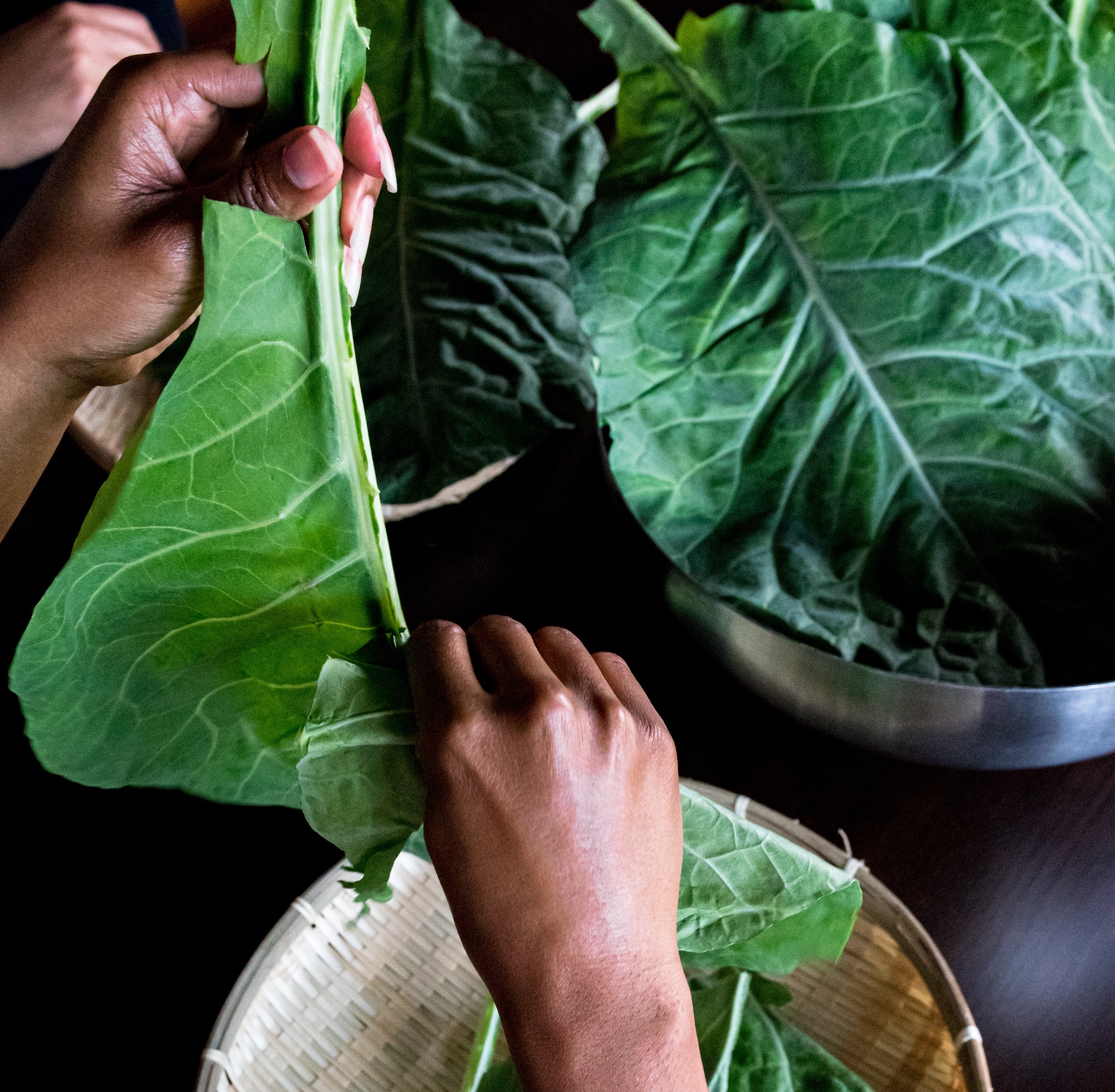
Take collard greens. In mainstream wellness, spinach and kale get celebrated as superfoods while collards, equally packed with fiber, potassium, vitamin K, and antioxidants, are treated as nutritionally suspect. "Collards themselves are not the concern," Ashley clarifies. "The issue is usually preparation methods that rely heavily on salted or smoked meats, which increase sodium and saturated fat." The solution isn't abandoning the greens. It's evolving the preparation. Mushrooms, onions, garlic, smoked paprika, even a touch of liquid smoke can create the depth and soul of traditional recipes while supporting cardiovascular health. The food isn't the problem. The assumption that it must be discarded is.
The Cultural Amnesia Around Our Food
Soul food didn't become "unhealthy" on its own. It was villainized through selective storytelling. "Soul food became villainized in mainstream wellness conversations because it's often reduced to its richest and most celebratory dishes while ignoring its historical roots and everyday foundation," Ashley says. The term emerged during the Civil Rights Movement as celebration, as resilience, as identity. Over time, media reduced it to fried chicken and processed meats, erasing the vegetables, legumes, and whole foods that have always been foundational.
What we're rarely taught: African and African American diets were historically plant-forward. Okra, black-eyed peas, rice, leafy greens, these weren't just survival foods. They were agricultural knowledge preserved and carried across an ocean during the transatlantic slave trade. Okra's very presence in gumbo (the word itself derived from a West African term for the vegetable) is a testament to cultural preservation under unimaginable circumstances.
"Historically, African and African American diets were largely plant-forward," Ashley notes. "Many of us were never taught that, and we just look at our foods as enslaved Africans and after. But we had a very long life before then."
The cardiovascular health disparities Black Americans face today aren't about collard greens or black-eyed peas. They're about systemic barriers: food rationing, limited healthcare access, economic inequities, environmental stressors. More than half of Black adults in the United States have high blood pressure, a disparity rooted in social determinants of health, not cultural cuisine.
And here's where representation becomes critical. Only about 3% of dietitians and physicians in the United States identify as Black. "When healthcare providers do not understand cultural food traditions or the social and emotional significance of gatherings like cookouts and family gatherings after church, they may unintentionally overlook the importance of preserving these foods," Ashley explains. A provider unfamiliar with collards may recommend kale instead, even though nutritionally, they're nearly identical. The message becomes clear: health requires abandoning your culture. It doesn't.
The Science That's Been Sitting on Our Plates
Let's talk about what traditional Black cuisine actually provides.
Fiber. Found abundantly in beans, vegetables, and whole grains central to Southern and Caribbean cooking, fiber stabilizes blood sugar, supports digestion, and helps the body eliminate excess cholesterol. Most Americans don't meet recommended fiber intake, yet traditional dishes naturally deliver it without requiring dietary overhaul.
Potassium. Leafy greens, beans, stewed vegetables, these potassium-rich foods help counterbalance sodium and regulate blood pressure. Research consistently shows that dietary patterns emphasizing potassium improve cardiovascular outcomes. This matters especially for Black adults, who experience hypertension at significantly higher rates.
Antioxidants and anti-inflammatory compounds. Garlic, onions, thyme, peppers, ginger, curry spices, ingredients deeply embedded in Black foodways contain plant compounds that support blood vessel function, reduce oxidative stress, and protect against heart disease.
These are the exact nutrients promoted in foods labeled "heart-healthy" in wellness spaces. They're the backbone of the Mediterranean diet everyone's been told to follow. The difference? They're already in our kitchens. They've been there all along.
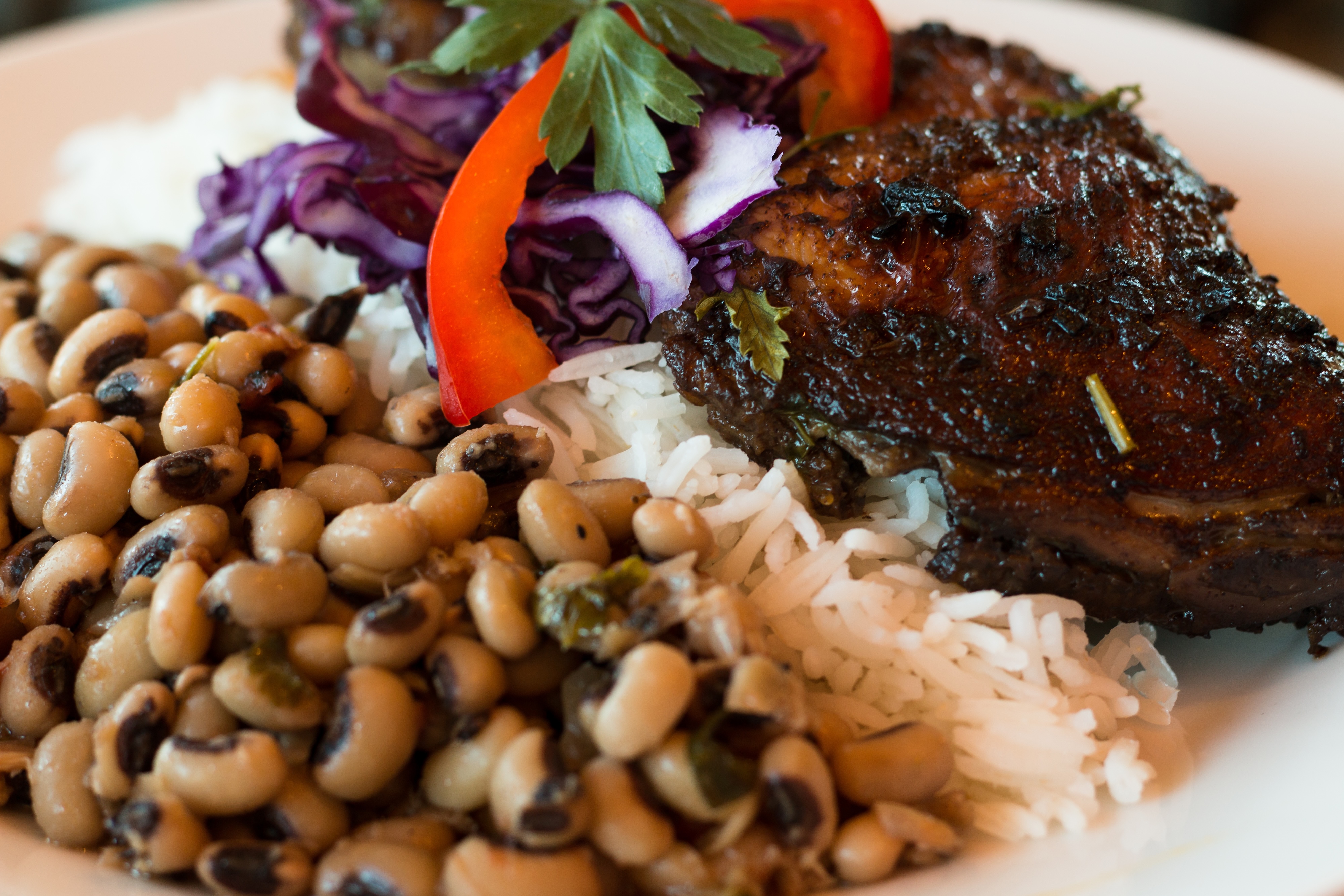
One cup of cooked okra contains about four grams of fiber, which research links to lowering LDL cholesterol and reducing cardiovascular disease risk. Black-eyed peas and other legumes lower cholesterol, provide plant-based protein, and support blood sugar stability. When traditional foods are viewed in their original context, they align closely with evidence-based heart-healthy eating patterns like the DASH diet. Soul food itself is not the problem. The misrepresentation of it is.
How to Honor Tradition While Supporting Your Heart
Ashley's approach isn't about restriction. It's about intentionality.
"My first step is always to start where you are," she says. "Just because your cousin, sister, or neighbor went vegan and feels healthier does not mean that approach is right for you. The most effective eating pattern is one that fits your lifestyle and feels realistic long term."
Small shifts make significant impact:
Reduce sodium thoughtfully. Rinse canned vegetables and beans. Use salt-free seasoning blends and fresh herbs. Season gradually, adding salt at the table only if needed rather than cooking with large amounts out of habit.
Adjust cooking methods. Air frying, baking, grilling, and sautéing reduce excess saturated fat while maintaining flavor. Lightly cooking vegetables preserves nutrients; prolonged boiling can reduce vitamin C content by up to 60%, while steaming or quick sautéing retains more.
Trace your roots beyond survival. Many traditional African and Caribbean food traditions were built on diverse plant foods, grains, legumes, herbs, and spices long before adaptation through hardship. Reclaiming and celebrating those foods maintains cultural identity while supporting health.
Make cultural foods everyday, not just special occasion. Teaching children about these dishes, sharing family recipes, telling the stories connected to them, this strengthens generational knowledge and connection. "Nutrition is never just about nutrients," Ashley reminds us. "Cultural foods carry history, resilience, identity, and community."
And yes, let's be honest about foods that pose cardiovascular risk when eaten frequently. Fried chicken and fried fish are culturally meaningful and widely enjoyed, but frequent consumption of fried foods has been linked to higher heart disease risk. This doesn't require elimination. It requires moderation and preparation adjustments: oven or air frying, shallow pan cooking with fresh oil, reserving fried foods for occasional consumption.
You Don't Have to Choose Between Culture and Health
When Black women are told they need to eat "clean" or Mediterranean to be heart-healthy, what they're really being told is: your culture is incompatible with wellness.
Ashley pushes back. "I'm not going to say those patterns aren't beneficial. They absolutely can support heart health. But instead of focusing on copying a specific diet, I encourage people to focus on what those eating patterns are actually built on and how those same principles already exist in our cultural foods."
Avocados, nuts, seeds, coconut in moderation, fish like snapper and salmon, these provide the healthy fats emphasized in Mediterranean eating. Vegetables, beans, herbs, rice and beans, stewed vegetables, plant-forward sides, these mirror the fiber and antioxidants that diet is built on.
"Where the conversation often becomes harmful is when Black women are made to feel like their culture must be replaced in order to be healthy," Ashley says. "Food is deeply tied to identity, family, and tradition. When healthcare or wellness messaging dismisses cultural foods, it can create shame and make healthy eating feel less accessible and less sustainable."

Heart health is less about following a trend and more about building balanced, consistent eating patterns. Black women have always been innovators in the kitchen, stretching ingredients, layering flavors, creating meals that nourish entire families. That knowledge is powerful.
"The goal is not to erase those traditions but to continue evolving them in ways that support long-term health," Ashley says. "And sis, please trust yourself, you know what to do! You do not have to abandon your culture to protect your heart. You can honor your heritage, your family traditions, and your health at the same time."
Ashley Carter, MS, RD, LDN is a registered dietitian and co-founder of EatWell Exchange, dedicated to making nutrition accessible and culturally relevant. Follow her work at EatWell Exchange and @AshleVNutrition.